
Key takeaway
Most forklift rack damage happens low on the upright where turning traffic and pallet movement are concentrated. The fastest way to reduce risk is to identify the impacted bay, restrict access when needed, document the full rack condition, and move quickly into repair, replacement, or guarding review.
In this guide
Jump to sectionWhy forklift rack impacts happen
Forklifts operate in tight aisles with heavy loads, limited visibility, turning pressure, and constant time constraints. Even experienced operators can contact pallet rack uprights during pallet placement, reverse movement, turning, staging, or dock-side traffic.
The most common impact zone is low on the upright, often within the first few feet above the floor. That area is exposed to forks, pallets, tires, and lower-level maneuvering. Small repeated impacts can eventually create a bigger structural concern.
Forklift impact should not be treated as a cosmetic issue until the rack upright, base plate, anchors, surrounding bay, and load condition have been reviewed.
Common types of forklift rack damage
Forklift damage does not always look the same. Some damage is a visible bend. Some appears as a twist, a torn punch hole, a shifted footplate, or cracked concrete around the anchor. Document the full condition before deciding what it means.
Bent front uprights
The most common forklift impact issue. Look for kinks, bows, crushed faces, and deformation near the lower upright.
Twisted columns
Angled impacts can rotate the upright or make the frame appear out of square. Photograph both the front and side of the post.
Base plate movement
A bent, lifted, or shifted footplate can change the urgency of the issue because the rack load transfers into the floor at that point.
Damaged anchors
Missing, loose, broken, or pulled anchors should be photographed from multiple angles along with the surrounding concrete.
Beam connector distortion
Forklift impact can travel through the frame and affect beam connections, clips, safety pins, and nearby components.
Repeat impact fatigue
Multiple small hits in the same area can be just as important as a single obvious strike, especially at row ends or tight turning zones.
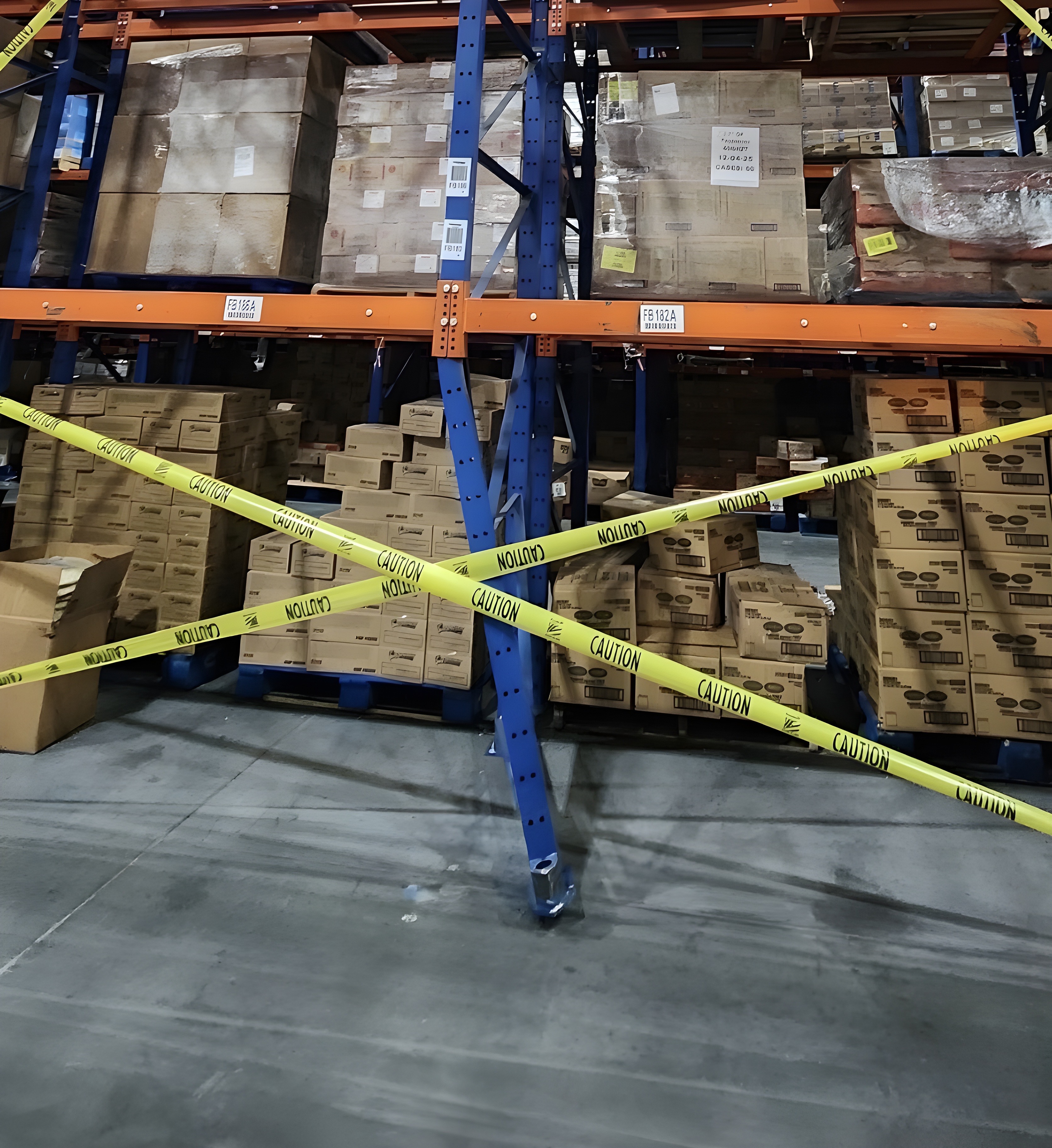
Forklift impact example
A close-up shows the hit. A full bay photo shows the risk.
The damage mark is only one part of the story. A repair review needs the upright, base plate, anchors, beam elevations, loaded condition, and surrounding rack bay.
Immediate response steps after forklift damage
When a forklift hits pallet rack, the goal is to reduce risk without creating unnecessary panic. A consistent response process helps safety, maintenance, and operations teams move quickly.
Identify the impacted bay
Mark the aisle, bay, row, upright, or rack location so the damage can be found later and tracked in reports.
Restrict access if needed
If the damage appears structural, severe, or unstable, follow your internal safety process before continuing normal traffic.
Photograph the full condition
Capture wide aisle photos, the full bay, the damaged upright, the base plate, anchors, and close-up details.
Request review before guessing
A qualified review can determine whether the next step is repair, replacement, emergency stabilization, or guarding.
Urgent damage
If the rack is loaded and the upright is visibly compromised, slow down.
Severe forklift damage can affect a rack bay while product is still stored above it. If there is visible crushing, twisting, base plate movement, or a suspected structural issue, treat the location as a safety concern until it is reviewed.
Loaded bay?
Note which beam levels are loaded and whether product can be moved safely.
Shifted base?
Photograph base plates, anchors, and floor condition before any repair decision.
Blocked aisle?
Use the emergency repair path when damage is disrupting access or creating active concern.
What to document after a forklift hit
Good documentation helps avoid delays. It also gives your EHS, operations, maintenance, and procurement teams a clean record of what happened and what was reviewed.
- Aisle and bay location: include row, column, bay, or a simple floor map reference.
- Wide aisle photos: show the traffic path, row end, nearby dock area, or surrounding layout.
- Full upright photos: show the entire damaged post, not just the dent or bend.
- Close-up photos: show the bend, twist, tear, crushed section, or impact point clearly.
- Base plate and anchors: show whether the footplate, anchor bolts, or concrete moved.
- Beam elevations: show beam levels and whether product is still stored in the bay.
- Rack profile: include upright width, depth, punch pattern, and manufacturer if known.
- Impact history: note whether this is a first-time strike or a repeat damage location.
Forklift damage documentation checklist
- • Aisle and bay reference
- • Wide aisle photo
- • Full upright photo
- • Close-up of impact point
- • Base plate and anchor photo
- • Beam elevations
- • Loaded or unloaded condition
- • Rear post and bracing condition
- • Forklift traffic direction
- • Repeat impact history
Understanding structural risk
Not all forklift damage requires full rack replacement. Some localized damage can be addressed with an engineered repair kit. However, severe twisting, tearing, shifted base plates, anchor damage, or widespread deformation may require a deeper structural review.
The key question is not whether the rack still stands. The key question is whether the damaged rack can continue to carry load safely and whether the repair or replacement decision can be documented.
Lower upright
High-risk impact zone
Lower upright damage matters because that area supports load transfer and takes the most frequent forklift contact.
Base condition
Anchors and floor
Rack feet, anchor bolts, and concrete condition help determine the urgency and the repair path.
System context
One hit can affect more
Look at beams, bracing, rear posts, and neighboring bays before calling damage isolated.
Repair vs. replacement after forklift damage
A forklift strike does not automatically mean the full frame must be replaced. It also does not mean a repair kit is automatically acceptable. The decision depends on the rack profile, damage severity, impact location, installation condition, and documentation requirements.
| Decision point | Repair may fit when | Replacement may fit when |
|---|---|---|
| Damage location | Damage is localized to one lower upright section. | Damage affects multiple posts, braces, beams, or frame areas. |
| Rack profile | The upright profile can be confirmed and matched to a repair path. | Rack data is unknown, altered, or not practical to document. |
| Downtime | A targeted repair can reduce teardown and aisle disruption. | The rack must be unloaded, removed, redesigned, or fully reconfigured. |
| Repeat impact risk | Repair can be paired with guarding after installation. | Replacement still needs guarding if the same traffic issue remains. |
Preventing repeat forklift damage
If the same location keeps getting hit, repair alone does not fix the traffic problem. Repeat impact areas need guarding, traffic review, and consistent inspection routines.
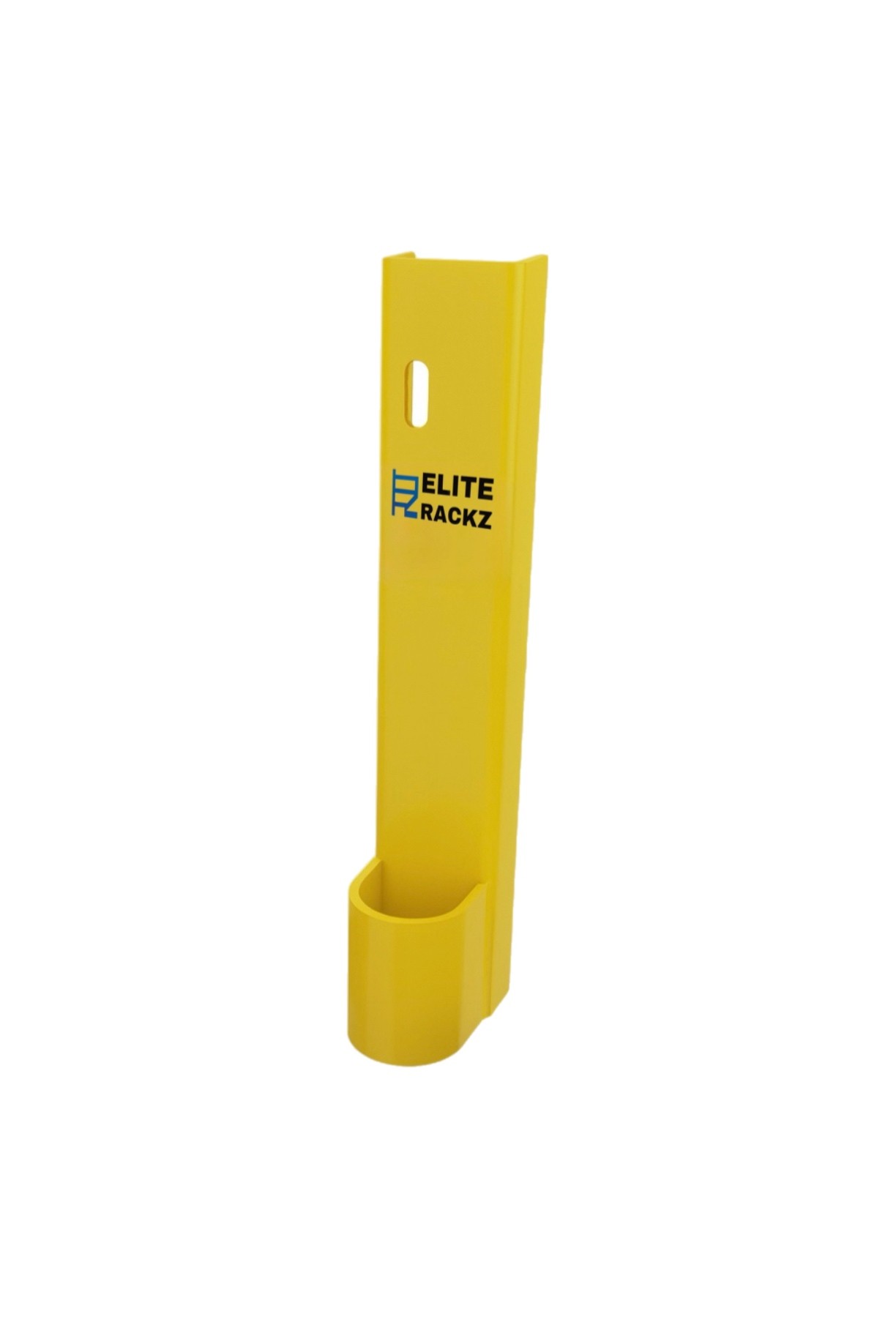
Column Guards
Protect individual uprights and lower impact zones after repair.
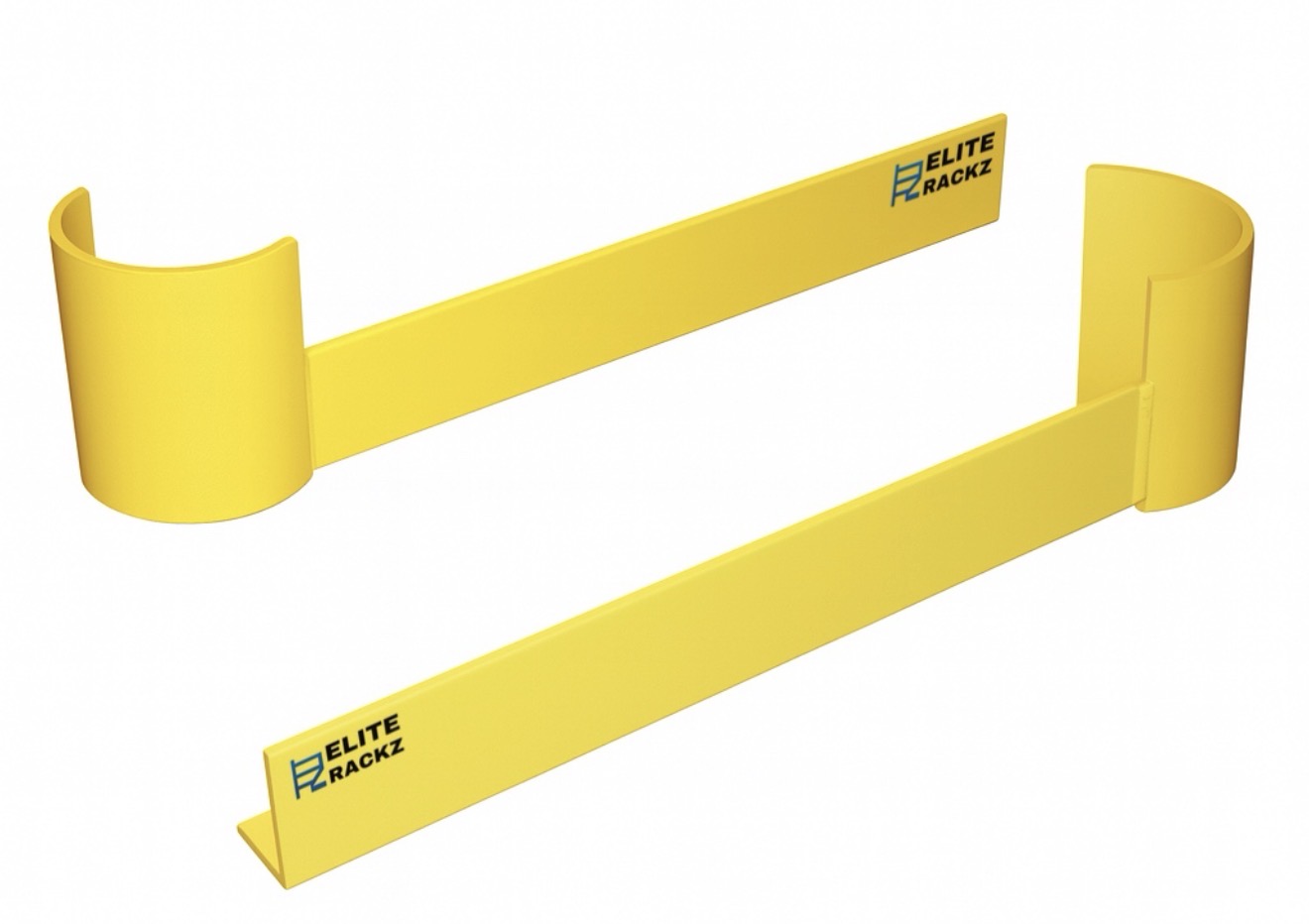
End-of-Aisle Guards
Protect exposed rack row ends from turning traffic and repeat forklift impact.
Prevention matters
The best repair plan also asks why the forklift hit happened.
Tight turns, exposed row ends, dock congestion, poor visibility, and repeated pallet contact can all create recurring rack damage. After repair, add guarding where the impact environment has not changed.
Guard exposed uprights
Use column guards where single posts are repeatedly hit.
Guard row ends
Use end-of-aisle guards where turning traffic strikes rack ends.
Keep inspection records
Track repeat damage locations so prevention is easier to justify.
FAQ
What should I do immediately after forklift damage to pallet racks?
Should a damaged rack bay be unloaded?
Can forklift-damaged pallet racks be repaired?
How can facilities prevent repeat forklift damage?
Forklift impact review
Send photos before the damage becomes downtime.
Elite Rackz can review the impact location, damaged upright, base plate, anchors, rack profile, and surrounding bay to help determine whether engineered repair, replacement, emergency support, or guarding is the right next step.