
Summary
The best choice is usually the one that restores structural integrity, reduces safety exposure, and limits operational disruption. Localized damage with a stable layout often points toward engineered repair. Widespread damage, obsolete rack, or a planned redesign may point toward replacement.
In this guide
Jump to sectionStart with the right question
Many teams start with the wrong question: “Which option is cheaper?” That can miss the real issue. Pallet rack damage affects operations, safety exposure, audit readiness, product movement, aisle access, and labor planning.
The better question is: Which option restores a safe, documented rack condition with the least unnecessary disruption? Sometimes that answer is an engineered repair kit. Sometimes it is full replacement. The difference depends on damage scope, rack configuration, documentation needs, and whether the current layout still supports the operation.
Repair is not automatically better because it is less disruptive. Replacement is not automatically better because it is new. The right choice is the one that can be engineered, documented, and installed around the actual facility condition.
When rack repair usually makes sense
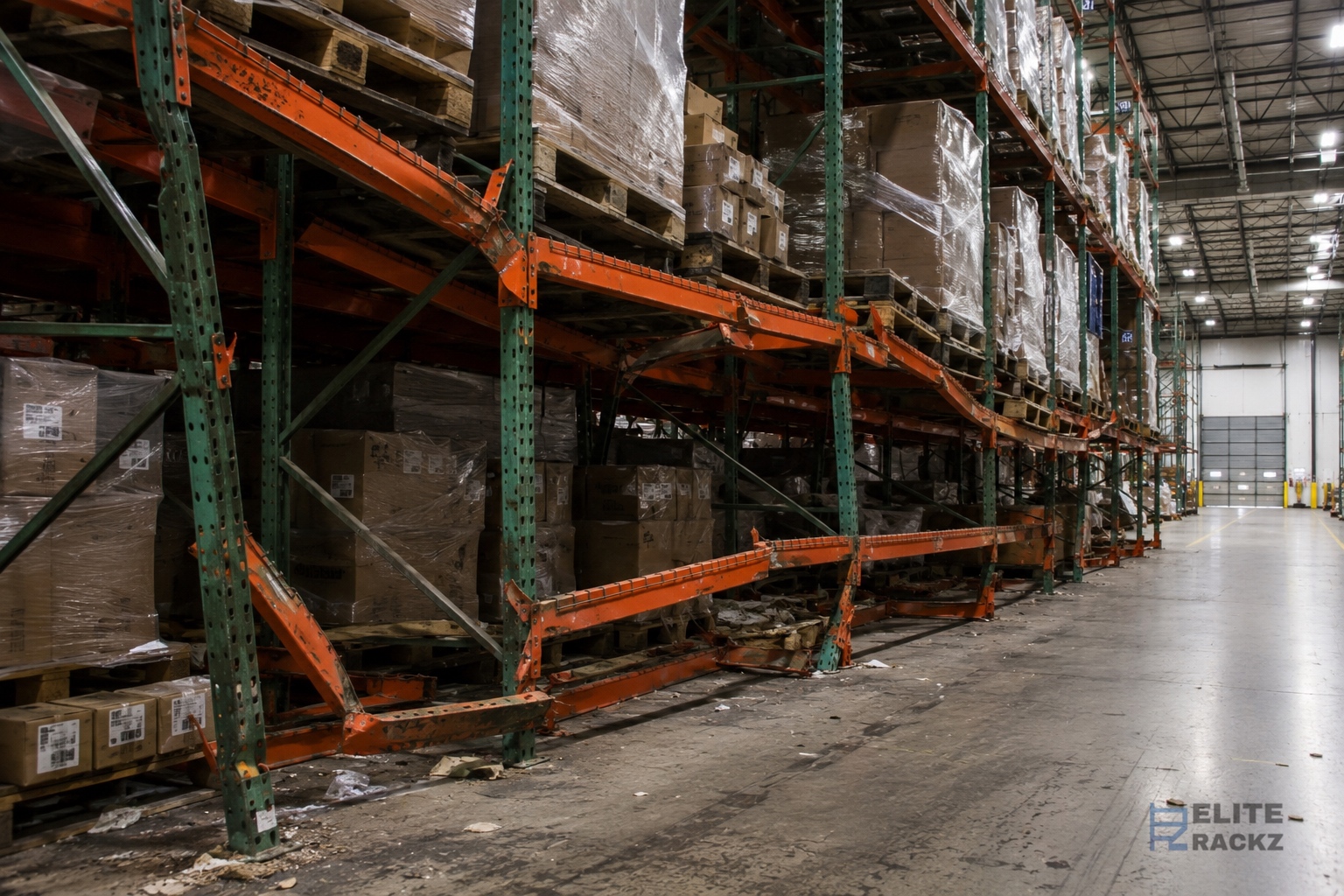
Engineered pallet rack repair is often the better path when the damage is isolated and the rack system still fits the facility. In many warehouses, damage happens at the lower upright where forklift contact, pallet movement, and turning traffic are most common.
A repair kit may allow the team to address the damaged section without unnecessary frame tear-down, extended shutdowns, or waiting for full replacement components. The repair still needs the right fit, correct installation, and documentation support.
Good repair candidate
- • Damage is localized to specific uprights or bays
- • Existing layout still works for the operation
- • Rack profile and measurements can be confirmed
- • A documented engineered repair path is available
Why repair can be attractive
- • Usually less teardown than full replacement
- • Can reduce aisle downtime
- • Can be paired with guarding
- • Can support audit records when documented
When replacement is the cleaner call
Replacement becomes the cleaner decision when the rack is compromised beyond a practical repair, when multiple components are affected, or when the facility is already planning a layout change.
Replacement may also make sense when the rack system is obsolete, manufacturer data is unavailable, load requirements have changed, or previous undocumented changes make the condition hard to verify.
Replacement may be stronger when:
- • Damage is widespread across the frame or aisle
- • The rack layout no longer fits the operation
- • Load requirements have changed
- • Rack history or capacity data is unclear
- • Repair cannot be properly documented
- • Multiple components are compromised
- • A redesign is already planned
- • Replacement improves the long-term facility plan
Downtime and total cost
The real cost is not just the repair kit or replacement frame. The real cost includes unloading product, blocking pick locations, staging inventory, coordinating lifts, waiting for material, scheduling labor, and managing internal approvals.
That is why a cheaper-looking option can become more expensive once operational disruption is included. A good repair vs. replacement decision compares the full picture: part cost, labor, engineering documentation, product movement, and how long the aisle or bay will be affected.
| Decision point | Engineered repair | Full replacement |
|---|---|---|
| Best use case | Localized damage with a verified repair path. | Severe damage, redesign, or unsupported rack condition. |
| Downtime | Often targeted to the damaged area and easier to phase. | May require unloading, teardown, procurement, and reinstall planning. |
| Documentation | Can include stamped calculations and repair documentation when applicable. | Depends on the replacement system, installer, and load documentation. |
| Guarding after work | Repair can be paired with column guards or end-of-aisle guards. | Replacement still needs guarding if the same impact condition remains. |
Decision matrix
Use the matrix below as an internal triage tool. It does not replace engineering review, but it helps your team understand which direction the project is likely to move.
Lean repair
Repair may be the right path when:
- • Damage is limited to lower uprights
- • Existing rack layout remains correct
- • Product movement needs to be minimized
- • Rack profile and measurements can be confirmed
- • Documentation can support the repair
Lean replacement
Replacement may be the right path when:
- • Damage is severe or widespread
- • The rack no longer supports operational needs
- • Capacity data is missing or unreliable
- • A redesign or re-slotting project is already planned
- • A repair cannot be properly documented
What to document before deciding
Documentation prevents delays. Before asking for a repair or replacement recommendation, collect the details that allow a qualified provider to understand the rack condition quickly.
- Wide aisle photos: show the rack row, aisle, and surrounding bay.
- Close-up damage photos: show the bend, twist, dent, cracked weld, displaced footplate, or anchor issue.
- Base plate and anchor photos: show the floor, anchor bolts, plate condition, and concrete condition.
- Beam elevations: show where beams are positioned and whether the damaged area is loaded.
- Rack profile details: include upright width, depth, punch style, and manufacturer if known.
- Operational constraints: note shutdown windows, unloading limitations, audit deadlines, or blocked locations.
Repair plus guarding
Repair restores the damaged section, but guarding helps reduce the chance of the same damage happening again. If the damaged upright sits in a high-traffic aisle, row end, dock area, or turning zone, the repair decision should include a protection plan.
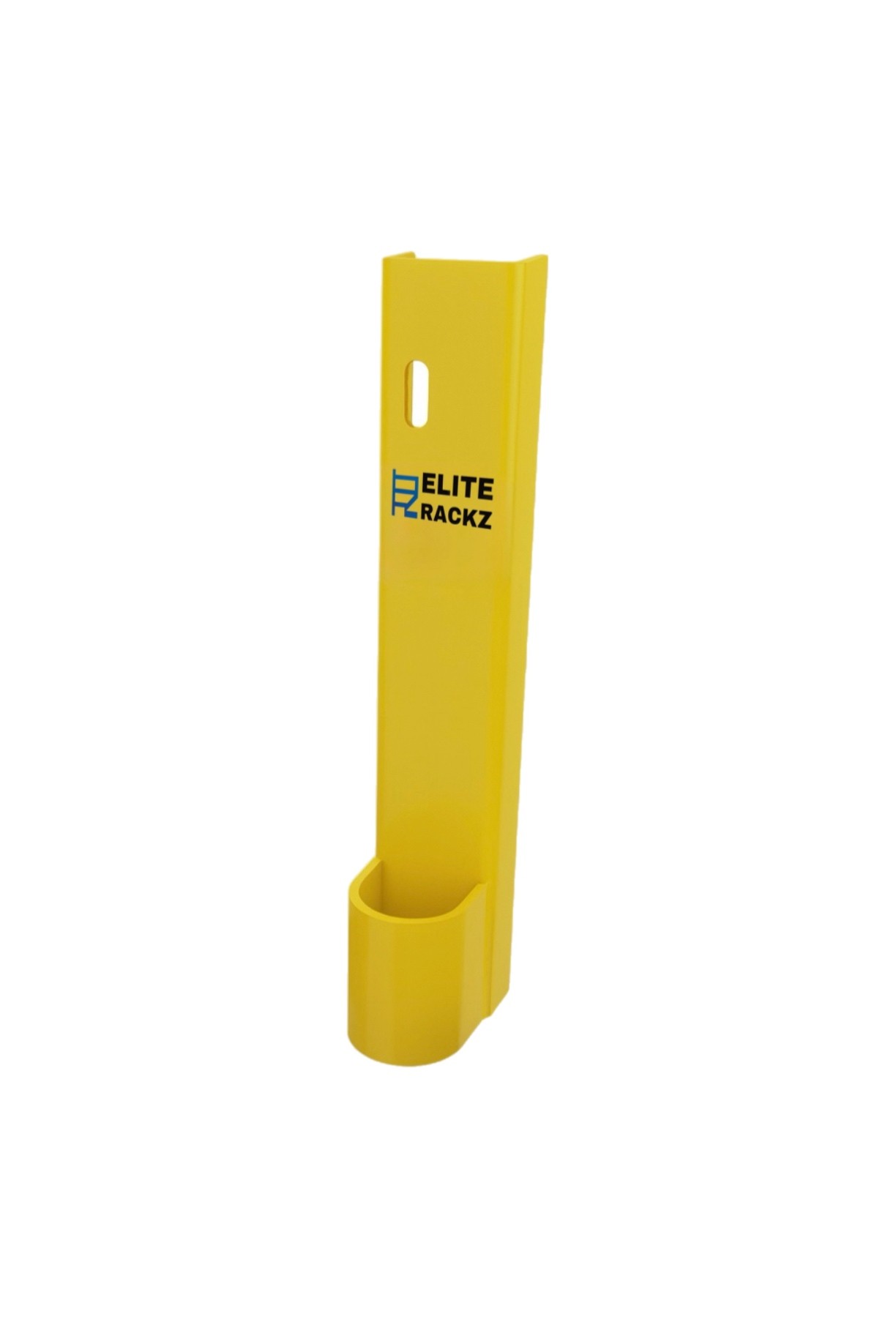
Column Guards
Protect individual uprights and lower impact zones after repair.
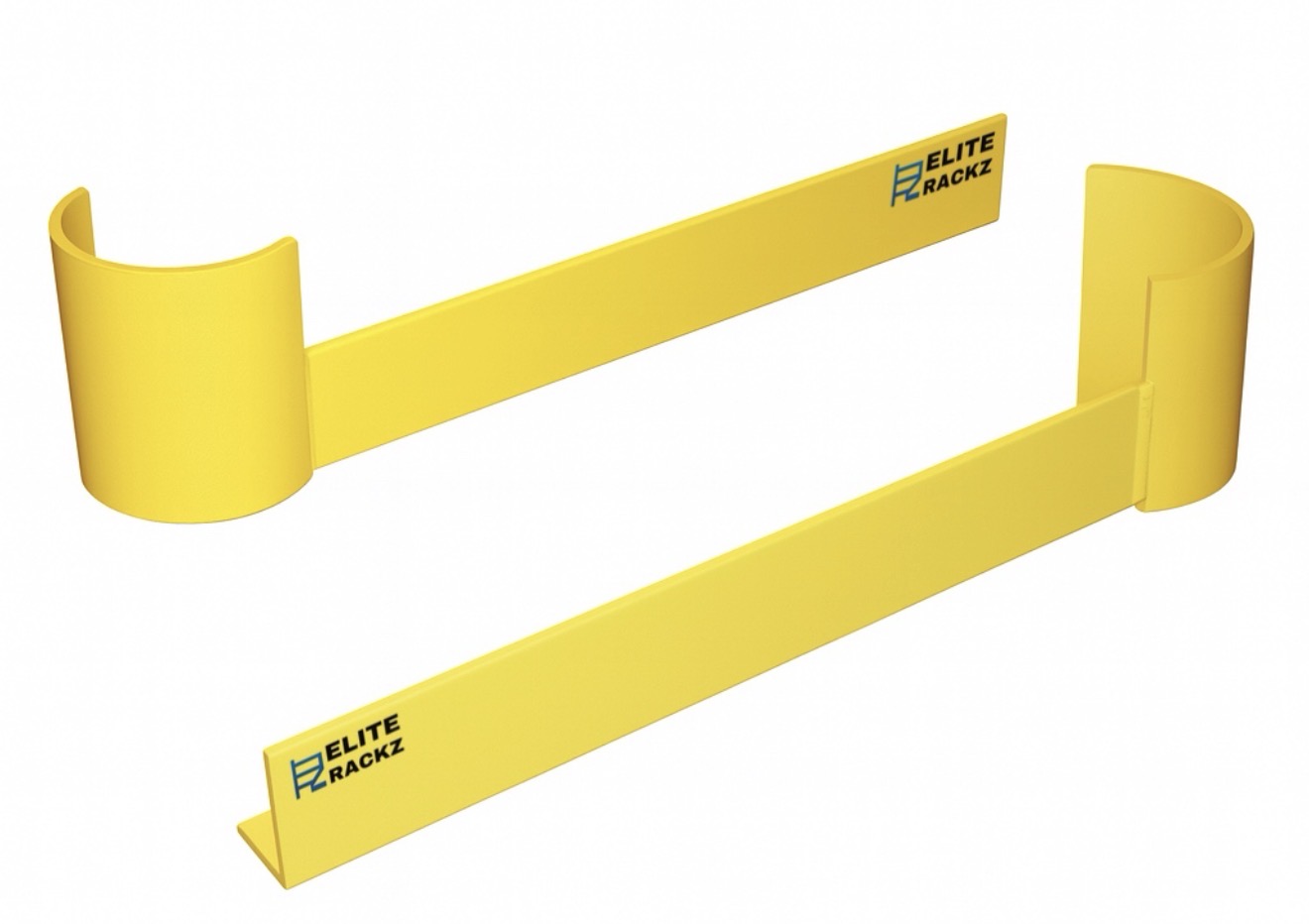
End-of-Aisle Guards
Protect exposed rack row ends from turning traffic and repeat forklift impact.
FAQ
When should pallet rack be repaired instead of replaced?
When is pallet rack replacement the better option?
Does replacement automatically increase rack capacity?
What should be documented before choosing repair or replacement?
Need a repair review?
Send photos before you decide.
Elite Rackz can review the damage, rack profile, base plate, anchors, and operating conditions to help determine whether engineered repair, replacement, emergency support, or guarding is the right next step.